Showing posts with label Insurance Coverage. Show all posts

Wednesday, September 14, 2022

VIDEO IS AVAILABLE -- Extreme Winds on Built Environment and Recent Changes in Building Codes

Here is the link to Division 1's Extreme Winds program from September 8, 2022.  


To learn more about this topic, please contact Mike Lane (mike@lanelaw.co) or Can Simsir (csimsir@walkerconsultants.com).  

To learn more about planning virtual or in-person programs with Division 1 (Litigation & Dispute Resolution), please contact Tom Dunn, Chair of Division 1 at rtdunn@PierceAtwood.com.  

Monday, October 23, 2017

In a matter of first impression, California Court declares subcontractor's CGL coverage includes subcontractor's work & delay to general contractor

https://www.steelconstruction.info/Modular_construction
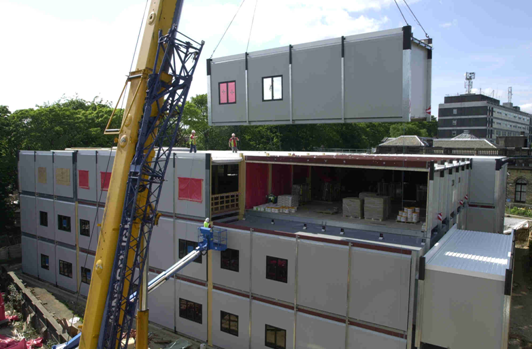
In Glob. Modular, Inc. v. Kadena Pac., Inc., 222 Cal. Rptr. 3d 819 (Cal. Ct. App. 2017) the underlying dispute concerned construction of 53 roof-less modular units for a rehabilitation center.  The Plaintiff-subcontractor constructed the units and another contractor planned to install the roofs. The subcontractor sued for non-payment and the general contractor counterclaimed that the units were defective. After a partial settlement, the remaining issue was whether the subcontractor's commercial general liability (CGL) insurer must cover the general contractor's claim for water damage to the tarp-covered, but roof-less units caused by heavy rains or if exclusions barred recovery.

The California Appeals Court concluded that the CGL insurance policy was not limited to risk of damage to third party property. The Court explained that the policy language referred to ‘property damage‘ without any reference to who owned the property.  Also there was no impediment to coverage due to the exclusion for "faulty workmanship." There was no indication that the exclusion applied broadly to any damage to the subcontractor's work before project completion.

More specifically, and as a matter of first impression, the Court held that the CGL policy's exclusion for damage to property on which the subcontractor is “performing operations” applied only to damage caused during the subcontractor's physical construction activities. Therefore, this exclusion did not bar coverage for the repair or replacement costs incurred to the units from rain and flooding damage to the units after they were delivered to the site.  Although the units were unfinished, because the subcontractor was not working on the units once delivered to the site, the subcontractor was not performing "active physical construction activities." Accordingly the exclusion did not apply.

As for the exclusion of "[t]hat particular part of any property that must be restored, repaired or replaced because ‘your work’ was incorrectly performed on it,” the Court held that "your work" referred only to the specific part of subcontractor's work, not broadly to the general area of the construction site where the subcontractor was working. The Court explained that this exclusion "applies only to the particular component of the insured's work that was incorrectly performed and not to the [subcontractor's] entire project. Here . . .the only arguably defective components or parts of [subcontractor's] work are the plastic tarps, as they failed to keep the water out." Importantly, "there was no allegation the items for which [general contractor] sought repair and replacement costs—the drywall, insulation, framing, and ducting [inside the units]—were defective.  [Rather,] those items were acceptable until it rained and they suffered water damage."  Accordingly the exclusion did not apply.

In addition, the Court determined that delay damages for the 131 days the general contractor spent remediating the water damage did constitute “property damage” within meaning of insuring clause of CGL policy.  The Court explained that the remediation was extra time that general contractor spent. And had the units not been damaged, the general contractor would not have needed to spend that time and instead could have been working to finish the project.  The delay therefore constituted a consequential loss and was deemed part of the damages insurer must pay “because of” the property damage.

---------------------------------------
The author, Katharine Kohm, is a committee member for The Dispute Resolver. Katharine practices construction law and commercial litigation in Rhode Island and Massachusetts. She is an associate at Pierce Atwood, LLP in Providence, Rhode Island. She may be contacted at 401-490-3407 or kkohm@PierceAtwood.com.

Friday, April 7, 2017

Reallocation Actions and Settlement Agreements: What Did We Settle?

By Stacy L. La Scala, Esq.

The purpose of a settlement and release agreement is to fully and finally dispose of a disputed matter. However, more and more often, a dispute cannot be fully resolved where non-parties to the dispute have contributed defense and indemnity amounts on behalf of one or more of the parties and have reserved the right to seek recovery of those amounts in subsequent litigation. In particular, insurance carriers are typically not part of the action and are not signatories to the settlement agreement.

Who owns the right to pursue the claim?

An essential step in any settlement negotiation, and one that is often missed, is the determination of who owns the right to the claims being asserted. The question becomes complicated where the parties to a dispute have an underlying contractual relationship that includes a defense and indemnity obligation and an insurance carrier has agreed to defend. So if a party is being defended by an insurance carrier, does that party own the right to assert and recover those fees, or does the carrier that actually paid the fees own the right?

In many jurisdictions, in order for a party to pursue contractual damages in the form of defense fees, that party has to actually incur the fees. This concept pairs with the common law notion of subrogation, wherein a carrier is subrogated to the rights of its insured to the extent of its payments. A general liability insurer that has paid a claim to a third party on behalf of its insured may have an equitable right of subrogation against other parties who are legally liable to the insured for the harm suffered by the third party, including defense and indemnification agreements. These rights are derived from the contract of insurance and include its insured’s rights against tortfeasors principally responsible for the loss and contractual indemnitors.

So how can you limit potential reallocation actions?

In recognition of a non-party carrier’s putative rights, parties to the underlying litigation have responded with a number of strategies to expand the scope of the release agreement. For instance, the parties can:
  1. Include any carriers as part of the negotiations and add them as releasing entities to the settlement agreement;
  2. Include a requirement that the claimant defend and indemnify the settling parties as part of any settlement;
  3. Require a pre-settlement assignment of claims to the claimant and have the claimant release those claims as part of a settlement; and/ or
  4. Have the carrier intervene in the action or force the carrier into the action by way of a cross-complaint and include it in a global settlement.
Is counsel well-versed in these types of settlement agreements?

The pitfalls for the novice in negotiating the scope of a settlement agreement and release are plentiful. Counsel has to be conversant with not only the claims against her client, but also who owns the rights to those claims. Should there be known third-party claims, they have to be discussed, bargained for, and, if possible, included in the settlement agreement and release. Where the third-party claims are not part of the settlement, counsel needs to understand the potential for a subsequent action, advise her client on the risk, and negotiate release language to put the client in the best-possible position should subsequent litigation be filed. Of course, finding a neutral that understands non-party rights and the limitations in settlement negotiations can significantly contribute toward the successful resolution of the matter and substantially reduce the likelihood of future litigation.

Are unknown claims going to be released as part of the settlement?

Seeking a full and final resolution of the matter, which would eliminate any future litigation arising from the subject matter of the dispute, is a lofty goal. Typically, the parties must first acknowledge that a general release does not release all known and unknown claims (pursuant to public policy, common law, or statute). As such, the parties to the negotiation must negotiate and specifically waive any limitations for unknown claims. For instance, in California and many other jurisdictions, to obtain the broadest form of release, the parties must set forth the limitations contained in California Civil Code Section 1542 and specifically waive those provisions. While including and waiving this provision in a settlement agreement is a good step toward obtaining a full and final settlement among the signatories to the agreement, it does not necessarily resolve claims of non-parties to the action. In particular, a carrier’s potential rights against its insureds and its derivative rights against third parties can provide the basis upon which a subsequent action can be maintained against the settling parties. As such, the parties to the release, the scope of the release, and third-party rights need serious consideration by counsel when negotiating a settlement and drafting the terms of the settlement and release agreement.

Stacy L. La Scala, Esq. is a mediator and arbitrator with JAMS based in Orange, Calif. His practice focuses on a wide array of disputes, including construction, insurance, business/commercial and professional liability matters.  He can be reached at slascala@jamsadr.com. 


Friday, January 20, 2017

Part of Contractor's Settlement Payment Covered by Insurer under the Duty to Defend

The California Court of Appeals in Navigators Specialty Insurance Co. v. Moorefield Construction, Inc. concluded that a general contractor's general liability (CGL) insurer must pay the general contractor for at least part of its settlement obligation notwithstanding there was no coverage.

The general contractor entered into a contract with the owner to construct a Best Buy store.  Years after the project was completed, the owner of the building sued the general contractor (and others) for breach of contract and negligence based on "claims the flooring had failed." The insurer accepted tender of defense from the general contractor with a  reservation of rights.

During the litigation it was revealed that the "flooring tiles had been installed on top of a concrete slab that emitted moisture vapor in excess of specifications." Worse, evidence came out that the general contractor knew about the excessive moisture vapors, but had directed its subcontractor to install the flooring anyway. The cost to repair the floor was $377,404.  The general contractor settled for $1,310,000. The insurer contributed the policy limits of $1 million and then filed suit that it had no duty under the policies to defend or indemnify the general contractor.

After a non-jury trial, the court agreed with the insurer and ordered the general contractor to reimburse the insurer for the entire $1 million that the insurer paid. The general contractor appealed and the Court of Appeals reversed in part.

The Court was faced with two questions - was the floor failure an "occurrence" giving rise to coverage? And did the supplementary payments provision of the policies require the insurer to still pay a part of the settlement?


For the first question, the Court answered "no" because "occurrence" under the policies was defined as an "accident." There could be no accident from the general contractor's deliberate act. As such: the insurer had no duty to indemnify the general contractor for damages and "was entitled to recoup that portion of the $1 million paid toward settlement that was attributable to damages."

As for the second question, however, the Court held that the standard CGL provision--"with respect to any claim . . . or any `suit' against an insured we defend," the insurer will pay "all costs taxed against the insured"--did require the insurer to pay for settlement "costs" and that those costs includes attorneys' fees when there, as here, was a "prevailing party attorney fees under a contract."  The Court concluded that the insurer's "duty [to defend] was not extinguished by the determination that [the insurer] had no duty to indemnify" for the damages the insured caused. The case was remanded "for a new trial limited to the issue of the amount of the $1 million paid by [the insured] that is attributable to damages, not attorney fees and costs of suit under the supplementary payments provision."
--------------------------------------------------
The author, Katharine Kohm, is a committee member for The Dispute Resolver. Katharine practices construction law and commercial litigation in Rhode Island and Massachusetts. She is an associate at Pierce Atwood, LLP in Providence, Rhode Island. She may be contacted at 401-490-3407 or kkohm@PierceAtwood.com.

Wednesday, March 30, 2016

OCIP Liability Insurer Required to Indemnify Florida Contractor for $23M in Property Damage Arising Out of Defective Subcontractor Work

Jeffery R. Mullen, Associate, Pepper Hamilton LLP

Pavarini Construction Co. v. Ace American Insurance Co., 2015 U.S. Dist. LEXIS 151247 (S.D. Fla. Oct. 29, 2015)

This action arose out of a construction project to build a 63-story luxury condominium tower located in Miami, Florida (“Project”). Pavarini Construction Co. (“Pavarini”) was the general contractor for the construction of the Project.  Pavarini hired a subcontractor for the installation of the concrete masonry unit walls and certain reinforcing steel, and a second subcontractor for the supply and installation of reinforcing steel within the cast-in-place concrete columns, beams, and sheer walls. The work performed by both of these subcontractors was deficient. A significant amount of reinforcing steel was either omitted entirely or improperly installed, including within important concrete structural elements, resulting in destabilization throughout the building. This, in turn, caused stucco debonding and cracking on the walls of the building, worsening cracking of cast-in-place concrete elements, and cracking in the mechanical penthouse enclosure on the roof, which led to water infiltration.

In December of 2010, upon becoming aware of the deficiency, the owner served Pavarini with a formal demand to repair all of the damage. Pavarini completed the work, incurring more than $25 million in costs relating to the remediation effort, including amounts paid to: consultants to investigate the damage and design a plan of remediation; install hurricane netting to prevent bodily injury and additional property damage; install a structural steel exoskeleton and a metal panel façade to provide the required structural support in the absence of functional steel beam;, and repair the mechanical penthouse enclosure on the roof.

Pavarini sought indemnification through the Project’s Owner Controlled Insurance Program (“OCIP”) designed to provide the owner, Pavarini and its subcontractors with uniform insurance coverage for claims of property damage and bodily injury. The OCIP included a commercial general liability policy issued by American Home Assurance Company (“American Home”) containing a $2 million per occurrence limit, and a first-layer umbrella policy issued by ACE American Insurance Company (“ACE”) containing a $25 million per occurrence limit. American Home ultimately acknowledged coverage, but ACE refused to pay for any costs associated with the repairs. After accounting for the $2 million recovered from the American Home policy and related salvage efforts, Pavarini brought suit against ACE seeking over $23 million in damages.

The parties filed cross-motions for summary judgment on, among other issues, whether the damage caused by the defective work of Pavarini’s subcontractors was covered under the policy. While the amount was undisputed, the parties disputed the nature and character of the loss. Pavarini claimed that none of the costs included the repair of defective work itself; rather all repairs were of damage to otherwise non-defective building components. ACE countered that much of the repair effort amounted to a de facto repair of the defectively installed steel.

The Court agreed with Pavarini, holding that the property damage caused by the subcontractors’ defective work to other property was covered under the policy.

The policy defined “property damage” as “all physical injury to tangible property, including all resulting loss of use of that property,” and included “[l]oss of use of tangible property that is not physically injured.” The policy excluded from coverage, in relevant part, “[p]roperty damage to ‘your work’ arising out of it or any part of it and included in the products-completed operations hazard.” This exclusion is known as the “your work” exclusion.  However, the “your work” exclusion did not apply “if the damaged work or the work out of which the damage arises was performed on your behalf by a subcontractor.” Thus, the policy provided coverage for damage to the completed Project caused by subcontractors’ negligent work, but did not provide coverage for the repair of the defective subcontractor work itself.

The question before the Court, therefore, was whether the subcontractors’ defective work caused covered “property damage.” Answering in the affirmative, the Court held that the complete replacement of defective subcontractor work may be covered when necessary to effectively repair ongoing damage to otherwise non-defective work. The Court found that because the subcontractors’ defective work caused cracking in the stucco, collapse of the penthouse enclosure, and cracking in the critical concrete structural elements, Pavarini was entitled to coverage for the repair of that non-defective work. And the Court found that in order to adequately repair the non-defective Project components, the building had to be stabilized. Even if the predominant objective of the repair effort was to fix the instability caused by the subcontractors’ defective work, the Court reasoned that the same effort was required to put an end to the ongoing damage to otherwise non-defective property, e.g., damage to stucco, the penthouse enclosure and critical concrete structural elements.

Consequently, the Court entered partial summary judgment in favor of Pavarini, holding that ACE was contractually required to reimburse Pavarini for the costs incurred.

Article originally posted March 14, 2016 on Constructlaw, an update and discussion of recent trends in construction law and construction, maintained and edited by Pepper Hamilton's Construction Law Practice Group. 

Monday, February 22, 2016

Additional Insured Status for General Contractors

Today, we have a post regarding insurance coverage from Division 1 member Stephen Wright of the Atlanta-based law firm of Taylor English Duma LLP.


Stephen Wright of Taylor English Duma LLP
Stephen has a business background, having received his degree from Indiana University in Business Economics. His practice is not entirely construction-based, but his advice to clients on insurance issues relates across the board.

In the post that follows, Stephen outlines the ins and outs of the "your work" exclusion on a typical comprehensive general liability policy. Perhaps unsurprisingly, even with the same policy language, that exclusion is not applied consistently in all states.

New Twists: As General Contractor, Are You Protected as an "Additional Insured"?


By Stephen L. Wright

Let’s say you’re a general contractor on a commercial project and you’ve had your subcontractors give you certificates of insurance that identify your company as an “additional insured” under the subcontractors’ general liability policy.  So you’re covered in the event your subcontractors’ work causes some type of damage, right? Think again.

It all depends upon which state law applies. If you’re in Connecticut, you’re in luck. If the general contractor is in Georgia, not so much. But in either case, the wording of the specific insurance policy can make the difference.

The distinction between the states turns on a typical exclusion found in all comprehensive general liability policies involving construction companies. The “your work” exclusion states in essence that there is no insurance coverage if the damages are to the contractor’s own work. The thought here is that this is really a contract risk and the contractor needs to be careful in the performance of its own work. But how does this exclusion apply when the general contractor is an additional insured on a subcontractor’s policy?

It probably comes as little surprise that there is disagreement as to how these two provisions should interrelate. In Connecticut, the state Supreme Court recently found that the policy was only intended to relate to the subcontractor’s own scope of work such that damage to other parts of the project caused by a subcontractor’s defective work could be the basis of a claim by the general contractor.  

By contrast, in Georgia a recent court decision found that the scope of “your work” is determined from the perspective of the party making the claim so that a general contractor would have the exclusion apply to the entirety of the project. The court found that to find otherwise would make the insurer a guarantor of the subcontractor’s performance. The Connecticut court rejected this conclusion and pointed out that performance bonds guarantee a much broader spectrum of subcontractor failures as opposed to insurance which just focuses on defective work.

Bottom line: be aware of what the law of the state in which the project is located provides and make sure that the specific policy language of the “your work” exclusion says what you need it to say. There is no one standard way of phrasing this exclusion and each insurer can have its own individual approach.

Stephen L. Wright is a Partner with Taylor English Duma LLP in Atlanta. 

Tuesday, November 11, 2014

A Contractual-Liability Exclusion to Insurance Coverage Might Not Apply to Defective-Work Claims Against a Contractor.

The U.S. Court of Appeals for the Fifth Circuit recently held that, under Texas law, an insurer could not exclude coverage for property damage claims against a general contractor that were based on violations of express warranties of good workmanship and repair. Such claims did not fall within the typical contractual-liability exclusion used in the general contractor’s commercial general liability policy (“CGL policy”). The Fifth Circuit reversed the district court and rendered summary judgment in favor of the homeowners asserting the insured’s rights, remanding for a determination of attorneys’ fees.


Friday, February 21, 2014

West Virginia Recognizes that Property Damage Caused by Defective Construction Is an “Occurrence” Under a CGL Policy

In July 2013, the Supreme Court of Appeals of West Virginia joined with a majority of states and ruled that defective workmanship resulting in property damage constitutes an “occurrence” under a standard Commercial General Liability (“CGL”) insurance policy. The case was styled Cherrington v. Erie Insurance Property and Casualty, Co.

The underlying case involved defects to a family’s home. There were three insurance policies in place: CGL, homeowners, and personal catastrophe. The lower court ruled that none of the three policies covered various defects in the home including an uneven concrete floor, water infiltration through the roof and chimney joints, and cracks in the drywall. The court found that these problems were economic losses and not property damage because the defects were caused by faulty workmanship, which was not an “occurrence” triggering coverage under a CGL policy.

The Supreme Court of Appeals reversed the decision, holding that property damage resulting from faulty workmanship is an “occurrence” under the CGL policy. In prior cases, the Court had held that faulty workmanship was not an occurrence under a CGL policy unless coverage is specifically included in the policy. It also had stated that CGL policies are not designed to cover poor workmanship. In this case, the Supreme Court of Appeals recognized that a majority of other jurisdictions had either legislatively or judicially found that poor workmanship was an occurrence under a CGL policy. The Court decided to join the majority.

The Court relied on two lines of reasoning. First, it examined the property damage in light of the policy’s definition of “occurrence,” which included an “accident.” The court found that faulty workmanship must be accidental because no contractor would hire subcontractors that would intentionally perform defective work. Thus, the property damage defective resulting workmanship was an “accident,” and therefore an “occurrence.” Second, the Court explained that excluding subcontractors’ defective work from coverage would violate the intent of the CGL policy, which is to provide coverage for subcontractors’ acts.

This case shows a continuing national shift towards expanding the scope of CGL policies and helps to resolve uncertainty about the scope of CGL policies in West Virginia.