Sunday, June 26, 2022

Consultant Corner: Rethinking the Role of Technical Experts in Pre-litigation Dispute Resolution

Welcome to the launch of The Dispute Resolver’s new series “Consultant Corner.” We invite article submissions from ABA Forum member consultants on topics important to the Litigation & Dispute Resolution Division (D1). In this article, the authors explore the role of technical experts in early dispute resolution. A combination of earlier engagement and more technical involvement could potentially help the dispute resolution process be more effective.
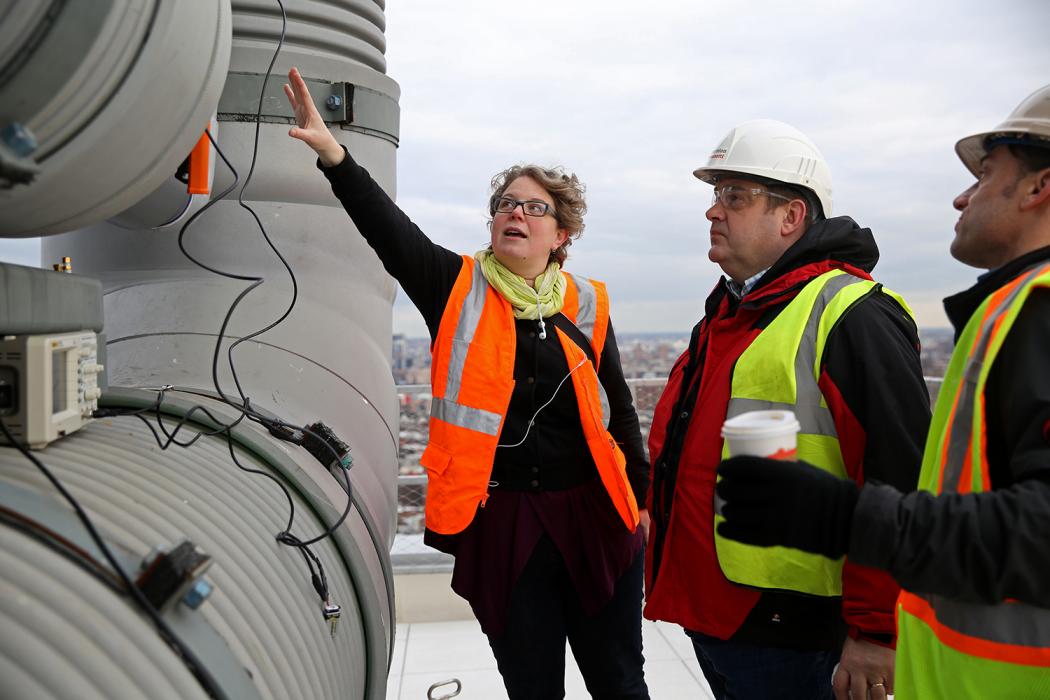

Construction disputes do not always require an expert; however, an expert is typically sought if the dispute involves particularly technical or complex issues that a lay person (including counsel and triers of fact) cannot readily understand. When is the most appropriate time to call upon a technical expert in a construction dispute? Most will turn to technical experts only after the dispute has advanced to the point where damages are high and litigation or a more formal ADR process is the likely path to resolution. Many also believe that a technical expert is required mainly for testimony in court, and therefore, late appointment of an expert shortly before trial is the most economical decision, but in many cases this may not be true. It is becoming more and more common for attorneys to retain an expert early, and the pre-litigation phase is arguably the best time to do so.

Pre-litigation Phase

During a pre-litigation or claim preparation phase, a technical expert typically serves as a “consulting expert” for one of the parties in the dispute, someone who can help evaluate any technical issues in dispute and opine on the relative strengths and weaknesses of proposed claims or positions. Another way an expert may be involved is to serve as an “independent evaluator” or a member of a “dispute review board,” jointly appointed by the involved parties, to advise on the merits of each party’s position based on the position papers and supporting information provided by the parties. Regardless of the role the expert may take and by which party the expert is retained, this process usually kicks off “after the fact” that is, when the dispute has led to large damages and/or delays. In many cases, it may already be too late for the expert to show value because the parties may already have experienced a significant economic loss, both parties may share significant fault in the escalation, and neither party is likely to clearly prevail in a settlement or litigation.

Rather than wait until this point in the dispute, we have seen the dispute resolution process be more effective when parties like owners, construction managers, design-build entities, and others retain experts earlier, even before a claim is fully formulated and a formal dispute resolution process has begun. Ideally, this kicks off when the dispute is just starting to rear its head as a disagreement, damages may not be fully formed or realized just yet, and the sides may not yet be entrenched in their positions. In this situation, the technical expert serves as a neutral third party who can weigh in on the cause of a problem and help to mitigate or resolve it (such as by performing independent design peer-review and developing a remediation plan to address the identified problems) before it escalates into a full-blown dispute in need of trial, arbitration, or formal mediation.

In this role, the expert serves as a neutral fact finder, as well as a source of technical insight. The expert plays the role of an independent evaluator or a dispute review board member by hearing each side and weighing the merits of each position, but at the same time, gets more involved in the technical nuts and bolts like a consulting expert to get to the bottom of the cause. And ideally, rather than just stop at finding the cause of the problem, the expert becomes part of the solution by proposing ways to get things under control, and potentially avoid similar problems from arising during the remainder of the project. The use of an expert in this setting has the potential to be highly cost-effective because one of the objectives is to prevent escalation of the damages that initiated the dispute in the first place. If damages are low to begin with, and stay below reasonable cost contingency levels, there may be little sense in pursuing costly recovery. A skilled and amiable expert, combined with a measured facilitator (perhaps inside or outside counsel for the owner or construction manager), can also encourage all sides to engage in solving the problem collaboratively, which can further expedite the resolution and help heal the bruises of any initial finger pointing. It can turn what might have been a failure into a success story and a triumph of teamwork.

Case Study

As an example of this sort of early expert involvement, the author was engaged by a construction manager at risk to help resolve a pair of disagreements between the project structural engineer and steel subcontractor, both of which threatened increasingly large repair costs and delays. One dispute involved widespread, seemingly random weld cracking throughout the project, for which each side blamed the other, with proposed or attempted repairs (most failing) often reflecting this finger-pointing. The other dispute involved steel assemblies that were surveyed to be out of level after installation, alternately being blamed on improper design and improper fabrication. The author was given an opportunity to review relevant documents, tour the site, speak to both parties, and perform some analysis. The author was able to discover a pattern in the seemingly random weld cracking that allowed the engineer and fabricator to focus their attention and develop alternative weld procedures and details to repair existing cracks and prevent future cracks. They also performed an analysis and facilitated load testing and surveying of the questionable assemblies to show that the appearance of out-of-level assembly was a result of benign construction tolerance issues, avoiding the need for costly replacement or retrofit. The final result was cooperation between the engineer and steel subcontractor, a halt to the escalating repair costs and delays, and a much less painful process in the long run for all sides.

Food For Thought

Before implementing this strategy, there are several questions that the involved parties and their counsel might consider:

  • How should parties that propose this type of dispute resolution broach the subject to their at-odds colleagues?
  • Like the engagement of an independent evaluator or dispute review board, can this type of process be written into contracts or teaming agreements?
  • Should everyone involved have a say in selecting the technical expert, or a right to veto the proposed expert?
  • What agreements need to be in place to encourage open and honest cooperation in the resolution process while protecting the rights of each party should litigation occur down the road? Is the potential for reducing the damage of the dispute enough encouragement for the parties to participate openly?
  • What happens if the involved parties do not cooperate or willingly provide necessary information to the jointly appointed technical expert?
  • If negotiation is unsuccessful and the claim proceeds to subsequent proceedings, such as litigation, what role might the technical expert be able to take? Might they hold any liability?

Conclusion

Regardless of the potential challenges, this kind of early expert engagement has the potential to facilitate dispute resolution and is worth exploring further by consultants and attorneys, as it aims to help all involved parties toward a positive outcome and to minimize costs before they become excessive. For us experts who are also practicing designers, this is also an opportunity to take lessons learned and apply them to future projects, preventing future disputes and bringing a type of deep satisfaction that our more traditional expert engagements cannot quite match.

Authors Thanh Do, Ph.D., P.E. and David Ojala, S.E., P.E., LEED AP, CWI are structural engineers at Thornton Tomasetti specializing in structural failure investigations and standard of care assessments. They assist attorneys, general contractors, design professionals, and owners at various phases of construction dispute resolution. In addition, both are active structural designers, with a focus on performance-based seismic design, existing building retrofit, and risk consulting.

Wednesday, June 22, 2022

View from the Field Part 4 - Labor Productivity Management - Prospective

View from the Field is a series of blog posts providing a practitioners view of the management processes and challenges associated with construction megaprojects as well as large and complex projects. Addressed by both Edward W. Merrow of Independent Project Analysis, Inc. (IPA) and construction lawyer Andy Ness at a recent ABA Forum on Construction Law conference, their high-level perspectives are elaborated. This multi-part series has and will expand upon some practical aspects of the many challenges facing managers as well as highlight suggestions for implementation by inside or outside counsel.

Summary – Prospective Labor Productivity Management

Labor productivity issues and challenges in the construction industry have been studied, analyzed and chronicled for decades. Highly respected sources of strategic and managerial thinking such as McKinsey & Company have offered extensive macro-level perspectives on labor productivity in the construction industry. This practitioner-level review and analysis offers a micro-level perspective with an emphasis on managerial pragmatism. Even further, labor productivity can be bifurcated into prospective and retrospective considerations. This first offering is prospective – with managerial tools and techniques that can be implemented promptly with potential for significant benefits for the direct hire contractor. For the direct hire contractor, Labor Productivity can be your Competitive Edge or your Curse. This is your tool kit to achieve Competitive Edge.

Part 5 of this series will address Retrospective Labor Productivity Managerial Options.

Labor Productivity Management – Elevated Importance

In many industries, the project delivery contracting strategy has shifted from Design/Build (D/B) or Engineer, Procure, Construct (EPC) to Design-Bid-Build (DBB). IPAs recommended strategy for large and complex projects is DBB. For the construction contractors (subcontractors), DBB places heavy reliance on the management of direct labor, hence labor productivity. 

For the direct hire contractor, the risk profile of the individual project/contract can be quite high. When direct labor costs are a high percentage of the contractors direct cost pool, labor overruns can have serious consequences. Schedule-centric managerial approaches, such as Lean Construction, Advanced Work Packaging (AWP), Installation Work Packing (IWP) and others must be combined with labor productivity management techniques. Together, this combination optimizes the time/duration to perform the work as well as sizing of the labor crew. This harmonizes time and related schedule management with labor productivity management. Thus, direct labor-related costs.

Finally, craft labor shortages in the construction industry are well recognized and highly problematic. Improving the labor productivity of existing direct hire workforce serves to mitigate shortfalls as well as to enhance the competitiveness of the contractors construction business. 

Direct Hire Contractor Management Recommendations

Key Performance Indicators (KPIs)

KPI is the best leading indicator of project conformance with or variance from the project baseline. Measure your actual field labor productivity weekly. Productivity KPI’s can be calculated using Earned over Burned” (Earned Work Hours / Actual Work Hours). Since Actual Work Hours are determined weekly for payroll, weekly assessment or calculation of earned value (e.g., billing quantities) or related Earned Work Hours budgeted is all that is needed. Weekly assessment of labor productivity on the path of construction provides a leading indicator” of project success or problems. McLaughlin & McLaughlin has managed projects with serious labor productivity issues and found that they can be resolved efficiently during erection and/or resolved with greater certainty when using dispute resolution processes.

Peak Labor Reduction

In times of construction craft labor shortages and individual skill shortfalls, the direct hire contractor can achieve a competitive edge by managing to achieve a reduction in the contractors peak labor count on the job. For example, a job budgeted at 100,000 direct labor hours over one year duration would have a peak labor force of approximately 72 workers. If labor productivity (PR) was .75 (worse than 1.0), the peak would be approximately 89 workers. However, enlightened management could improve this PR to 1.15. If done, the peak labor would be reduced to approximately 61. This reduction in crew size (89-61=28) reduces the demand for additional workers. In times of labor shortages and supervisor challenges, this serves to lower costs and supervision complexity.

Path of Construction

Use an execution strategy that is focused on labor productivity on or near the Path of Construction. Apply this focus and the rest of the job will almost take care of itself. Use Workface Planning coupled with Lean Construction, in some blend or fashion, on the Path of Construction. Coupled with a sound productivity management concept and plan for site logistics, the direct hire contractor will enjoy the benefits of effective field labor productivity management. Use a weekly Key Performance Indicator (KPI) of Earned over Burned” (Earned Hours / Actual Hours). This leading indicator will give supervisors and managers positive control of the productivity. 

Lean Construction

Lean Construction has achieved richly deserved popularity in the industry. The Lean Construction Institute’s mission is “…to transform the fragmented design and construction industry through lean thinking, tools and technology.” Advocates Joe Donarumo and Keyan Zandy offer workshops and have authored The Lean Builder, A Builders Guide to Applying Lean Tools in the Field.  “Hoots on the Ground” is highly informative.  While very popular and apparently highly effective, a complimentary management tool is still needed to address field labor productivity. Just as the Last Planner SystemTM uses Key Performance Indicator (KPI) Percent Plan Complete,” a labor productivity management plan and KPI is needed. Weekly Productivity Ratio (PR) is simple, efficient and effective. Earned over Burned” is easily implemented and is compatible with Last Planner SystemTM.  All direct hire contractors and trade partners should incorporate a Labor Productivity KPI into their managerial tool bag.

Advanced Work Packaging (AWP) and all

Advanced Work Packaging (AWP), Workface Planning, Installation Work Package(ing) (IWP), Construction Work Package(ing) (CWP) and other related schedule-centric managerial approaches have considerable value in managing labor productivity. Construction Industry Institute (CII) offers publications that cover these approaches. Using this managerial process is a strong option with planning as the key.

Acceleration

During project planning and execution, the project / construction management teams are often confronted with requests or demands to accelerate performance. Whether using specific methods or performance-based approaches, the acceleration requirement, virtually without exception, degrades or reduces field labor productivity. Regardless of the rationale for acceleration, the contractor should choose an approach that minimizes the negative impact on the contractors field labor productivity. Prolonged scheduled overtime (more work hours per week than planned) rapidly degrades field labor productivity. Avoid widespread use of this choice. If necessary and feasible, apply scheduled overtime to the path of construction, not the entire site. Rotate the specific personnel. A better choice is shift work where a second shift can be implemented on or near the path of construction. Use proven techniques for planning and managing this second shift. Above all, manage acceleration involving field labor with great care.

Single Source of Truth (SSOT) 

The data management associated with field labor productivity is a key consideration. Define the productivity-related data in the Project Execution Plan. Gather the data on a contemporaneous basis (needed regardless), and control access to the editing or changing of this data. This ensures availability if claims for additional compensation for productivity-related losses become desirable.

Modularization

Likely, the most commonly suggested managerial option to labor productivity management is to fabricate or erect modules (portions of the total scope of work) using an offsite fabrication facility. A legitimate discussion of a modular erection strategy would require a dedicated post. Suffice to say that the strategy has merit, given the right circumstances. Like AWP, advanced planning of work packages is needed. Further, logistics planning associated with transportation of the module(s) from fabrication facility to the job site work front is a must and requires substantial skill.

Conclusions (Part 4)

Proactive management focused on field labor productivity can have many positive impacts:

  • Offsets Labor Shortages – reduces the number of field labor, mitigates the impact of shortages and reduces the complexity of the related supervision.
  • Reduces Risk – reduces the risk of cost overruns by managing the smaller total labor force at the site and the need for new hires.
  • Facilitates timeliness – identification of negative events and variances, when recovery options are still available.
  • Creates Acceleration Options – Allows management of the productivity-related negative impacts of acceleration situations.
  • Enhanced Profitability – The direct hire contractor can reliably operate at or beneath the contractor’s cost and labor estimate baseline.

For the direct hire contractor, this becomes the Competitive Edge not a Curse.

View from the Field – Retrospective Labor Productivity Managerial Options (Part 5)

Having discussed Prospective Labor Productivity Management, Part 5 of this series will address the challenges of Retrospective Labor Productivity Managerial Options.

Author George T. McLaughlin PMP CCM has worked worldwide in this industrial marketplace since the early 1980s. He serves Owners, Prime Contractors, and Subcontractors. For the most part, Mr. McLaughlins work is performed on-location where the relevant work is being performed hence the title View from the Field.” Mr. McLaughlin is a principal of McLaughlin & McLaughlin out of Austin, Texas.

Monday, June 13, 2022

Introducing The Dispute Resolver's New Series: "Consultant Corner"

The Dispute Resolver editorial team is looking for submissions from Forum member consultants for our new blog series “Consultant Corner.” Perhaps you have a new area of expert analysis that you feel practitioners need to know about or there is a recent case study that might be of interest to our readership. If you have insight to share, send your submission in a Word document to Catherine Delorey at cdelorey@grsm.com. Guidelines for submissions:

  • They should be between 500 and 1,500 words in length;
  • We ask that you provide with your submission (or at the beginning of it) a sentence or two why you believe the topic is important to the Litigation & Dispute Resolution Division (D1);
  • Submissions should contain substantive analysis of interest to construction advocates and neutrals. While we expect that the quality of your commentary will naturally highlight your capabilities and generate business leads, the article should not read like a sales pitch or be overly promotional in nature;
  • If you need to cite to anything, we ask that you use hyperlinks or parenthetical cites within the body of the article (do not use footnotes or endnotes);
  • To increase exposure, we recommend that you include a short author bio (1-2 sentences max) at the end of the article with a hyperlink or parenthetical cite to your website; and
  • While not a requirement, pictures are worth a thousand words! If you have photos or links to videos that help illustrate the theme of your article, we encourage you to include them.


Sunday, May 1, 2022

What's Up With Division 1 (No. 16)

New York . . . New York . . . Here We Come!  The ABA Forum on Construction Law's Annual Meeting is scheduled for May 4-7 in New York City. This meeting will be special for a lot of reasons including:

  • The first program focused on the practice of law as in-house counsel.  While other aspects will be covered during the program, this is a great opportunity for outside counsel to learn more about their clients and to build new relationships with new in-house counsel who will be in attendance. 
  • This is the first time back to New York since the Forum used to team up with TIPS for its midwinter meetings.  There are a lot of events and receptions planned for the Annual Meeting because it is so exciting to be back in the big apple.  
  • Very important awards and recognitions will be given out at this meeting.  It is also when there is a transfer of Forum leadership.  Rob Ruesch from our Steering Committee is nominated for the Governing Committee -- come and support Rob! 
  • Arlan Lewis, our Forum Chair, is having a gala to celebrate the Forum's 45 year history.  This is going to be black-tie and more extended and involved than the typical welcome reception.  I don't know if this is a Forum first, but it is new to me so it will be unique to be there. 
  • Building for Good, a non-profit formed by Forum leaders, is holding its Racing For Good in Central Park on Friday afternoon. Walk, run, and compete for a good cause. 
Other excellent reasons to attend for Division 1 include our social event and practicum.  Both are on Wednesday, May 4, 2022.  

Like the program at large, the practicum is a mini-boot camp for "new" in-house attorneys.  But, all are welcome to attend provided there is capacity in the room.  This is a unique opportunity for outside counsel to look behind the "in-house" curtain about how they are trained, what issues they face, and how they aspire to select and work with outside legal counsel. Register for the practicum here.  

Division 1 and Division 13 are doing our social event together on at 7-9PM on May 4th.  It is hosted by George Fink of BRG -- thanks George & BRG! -- and will overlook Times Square (just 3 blocks from our Sheraton Hotel). We will have appetizers, drinks, and good networking just early enough so you can explore around town before the first plenary session on May 5th.  Register Here


On Thursday, April 28, 2022, Division 1 hosted a Toolbox Talk Series about neuroscience and mediation featuring Nancy Greenwald and moderated by David Ponte.  


Nancy did a great job walking us through the power of priming in negotiations and mediations.  She approached the presentation from a scientific viewpoint and provided dozens of resources for further research on the topic.  View the robust materials on Division 1's ABA Communities page. Thanks Nancy and Dan for a great TTS program!  If you missed this TTS, we will post the video of it once it is available.  

Marissa Downs and I discussed the Division 1 Neutrals Directory.  We are going to update the directory to contain more of the information we have gathered from our neutrals, send out an inquiry for updates and additions to the directory, and continue the feature series.  Great job Marissa for seeing this initiative through.  These posts and the Neutral Page is one of the most visited parts of The Dispute Resolver!  

We had our Division 1 monthly meeting on April 11th. We are in a good position for most of the programs/events in 2022 and are actively working to close out the balance.  If you missed the meeting, visit (and join if not a member) Division 1's ABA  Communities page here where you can see the minutes posted in the Discussion Forum.  

In you don't get enough of New York at the Annual Meeting (or you cannot attend for some reason), consider going to the American Bar Association's 2022 Construction Conference also in New York on June 9, 2022.  I have been to this before and it is great for all to attend -- in-house counsel, outside counsel, arbitrators, mediators, etc. 


The AAA is a good friend to Division 1, including Jen Millender (who serves on our TTS committee) so please consider attending. Register here

On a personal note, I had a great vacation last month in Europe visiting good friends and tour southern Germany and the Austrian Alps.  Of course, I was sporting the Forum gear (Building For Good Shirt) as you can see below having lunch (and a good German beer) at a ski resort midway point. 


See you in New York and, as always, if you want to learn more about Division 1 or the Forum, please contact me.  Also, if you want some D1 swag (lanyard, waterproof phone case, or umbrella), seek me out and I may have some to give you if you join D1! 

rtdunn@pierceatwood.com
401-490-3418


Monday, April 11, 2022

What's Up with Division 1 (No. 15)

It has been a few months since I wrote a message on The Dispute Resolver so I have a lot to report.  First, thanks to Catherine Delorey, Marissa Downs, and the whole TDR team for keeping up with the blog and the D1 Neutral Features.  Some of the features from this year have had amazing readership (well over 1,500 views for some of them).  

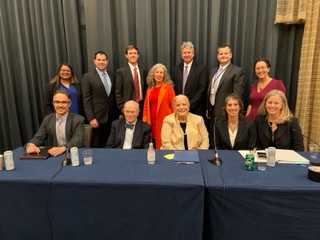
Midwinter Meeting 2022 - San Diego.  While it was unseasonably cold and windy for San Diego, Division 1 programs were great.  Marissa Downs planned an excellent lunch program on the Indiana State Fair Stage Collapse and she had the magic touch to resolve the technical issues that arose during the program.  Janie Winning knocked it out of the park with the social program in the Gas Lamp District.  The food and atmosphere was awesome!  Here are some photos from the meeting:

January Toolbox Talk Program - Sakib Khan and Joelle Jefcoat (D3) on Delegated Design.  Sakib and Joelle did a great job tackling this thorny topic.  It was great to partner with Division 3 as well on this program.  We recorded it so please check it out:


Building Results: A Panel for Law Students - Division 1 teamed up with the Membership Committee to conduct a program for law students.  We assembled a great panel of construction lawyers and I moderated this with Lexie Pereira (our own law student and YLD liaison).  Please share this video with your network as well.  


Jury Selection Program - In March, Jason Rodgers-da Cruz and Joe Imperiale moderated a program on jury selection.  The panel included experienced trial attorneys and a jury consultant.  This was a good preview into the trial advocacy practicum series that Jason, Joe, and Ashley Sherwood are putting together for the Fall 2022, Midwinter 2023, and Annual 2023 Meetings.  


UPCOMING PROGRAMS

April Toolbox Talk Program - Neuroscience in Mediation (April 28 at 12PM ET).  Nancy Greenwald will be discussing research and findings concerning neuroscience in mediation.  David Ponte will be moderating the discussion with Nancy.  Join the conversation and register for this free toolbox talk program.


The Annual Meeting in NYC is less than one month away!  Here is the program brochure and registration link.  The program will focus on in-house counsel for construction companies.  You can attend in-person and virtual.  Division 1 planned a practicum, lunch program, and social event.  Division 1 steering committee member, Kelsey Funes, is one of the co-chairs of this program so lets support her by registering and attending this program.  It has been many years since the Forum has been in NYC so it will be one to remember.  Here are some of the events at the Annual Meeting:

  • In-House Counsel Practicum - Wednesday, May 4th.  Cassidy Rosenthal put together a great panel of in-house counsel for the practicum.  It is a bootcamp for in-house counsel covering a broad range of topics.  Outside counsel are welcome at attend this program virtually.  
  • Social Event - Wednesday, May 4th at 7PMThere is going to be an awards gala on Thursday night and another social event on Friday night so we are planning our Division 1 event on Wednesday night.  George Fink planned this event which will be at a rooftop bar overlooking times square.  Register for the event here or click on the image below to sign up.  We will be partnering with Division 13 for this event.  Thanks George and BRG for making this event complimentary to attend.  

  • Blockchain in Construction Lunch Program.  Rob Ruesch planned our lunch program for the Annual Meeting.  We are teaming up with Divisions 2/4/6 for this lunch.  Speakers are Jake Rohrer and Matt Gelb from Wipfli LLP and Nancy Greenwald.  
We are actively planning for upcoming meetings.  We are having our monthly business planning meeting on April 11th at 3PM ET.  Here is the zoom link to attend https://americanbar.zoom.us/j/8035484597?pwd=bld1YysxL25ibWxYZTQ5L29OTmYrdz09.  

See you all in NYC next month! 

Tom Dunn
Division 1 Chair
rtdunn@PierceAtwood.com


Tuesday, March 29, 2022

Meet D1’s Neutrals Series: Janie Winning


Company: Winning CM Strategies
Location: Sacramento, California
Email: janie@winningcms.com
Webpagewww.winningcms.com
Education: Pepperdine School of Law, Straus Institute
                 (Masters in Dispute Resolution)
Types of ADR services offered: Early Dispute Resolution (EDR), mediation, settlement conferences, ODR
Affiliated ADR Organizations: MBBI, WBENC, WOSB, PMI
Geographic area served: Pacific West Coast (California, Oregon, Washington)


Q: What sets you apart as a mediator?

A: The biggest differentiator is that I am a non-lawyer! I worked in the construction industry for over 20 years developing experience in strategic planning, scheduling, and operations for mega construction programs.

Q: Why did you want to become a mediator?

A: In my career, I consistently found myself delivering difficult information. I was able to develop processes to address these conversations in a collaborative, productive way. I have a passion about this work and thrive on being instrumental in changing the face of conflict and developing a path for teams to move forward toward program / project completion. I went and obtained a Masters in Dispute Resolution to further develop my skillset in facilitation, negotiation, settlements, and mediation.

Q: What percentage of your current legal practice is spent on ADR work?

A: I spend 80% of my time focused on ADR. The remaining 20% is spent on planning, scheduling, and claims avoidance for construction projects and operations.

Q: What characteristics or personality traits are important to facilitating settlement?

A: Difficult conversations often occur abruptly without an opportunity to prepare. The outcome of these conversations is a pivotal moment for the project team. This requires subject matter knowledge, emotional intelligence, and the ability to respond and manage a productive conversation.

Q: Many mediators are only called in after the parties are well down the path towards formal arbitration or litigation. Describe how you help mediate disputes during the project to help the parties avoid a formal dispute.

A: Most of the mediation work that I do is conducted during the project and before a formal dispute has been filed. I often facilitate “red-zone” planning for the last six months of the project and “alignment meetings” where the project/program has taken an unfortunate turn or strayed from the original vision and goals in the areas of cost, schedule, and quality.

Q: Mediators are oftentimes described as “facilitative,” “evaluative,” or “transformative.” How would you characterize your style?

A: Facilitative. I facilitate a productive approach to conflict with the goal of collaboration and alignment as the team works toward project completion and satisfying client requirements. I use a specific settlement process developed by Winning CM Strategies. The position of the team in the project lifecycle depicts which process is used.  The project teams are taken through a process which identifies the exposure, interests, and areas where stakeholders are vested in their position. This takes time as conflict arises because these interests have become self-serving, taking the focus off the original project vision and goals. A conflict in construction is usually multi-stakeholder, characterized by layers of issues, interests and emotions which have been developed and triggered throughout the conflict. I coach project teams through a process and encourage the sharing of information with opposing parties. Teams with the goal of resolution should come prepared and without surprises to achieve a productive outcome.

Q: Do you recommend individual preparatory meetings with the parties and counsel prior to the joint session? Why or why not?

A: I do recommend preparatory meetings. This is the best opportunity for each side to prepare their positions, understand their exposure, the information gaps, and the opposition’s potential response.  Surprises prolong the process and impinge the ability to come to a timely resolution. In complex cases, it may take time to organize the information and approach. The case may necessitate the need for a bifurcation of the case. Alignment on approach is essential for the best outcome.

Q: What can attorneys do to best position their clients for a successful mediation outcome?

A: Help the client understand their true exposure and a true estimate of the opposition’s BATNA.

Q: How do you use open-ended questions to help parties overcome impasse?

A: It is the mixture of using open-ended questions and facilitating the “connection of dots” through the means of strategic questions. Conflicts are filled with assumptions on how a position was developed, money was spent, and paths were taken. Open-ended questions give opportunity for stakeholders to answer and tell their story in a safe way.

Monday, March 21, 2022

USMCA Update: Rules of Origin and Dispute Resolution

After many years, Mexico, USA, and Canada successfully negotiated and replaced NAFTA (North America Free Trade Agreement), implemented in 1994, with USMCA (United States-Mexico-Canada Agreement), which took effect on July 1, 2020.

USMCA’s Chapter 4 addresses the rules of origin, an important topic for industries like automotive as well as construction. Rules of origin are the criteria used to determine the national source of a product, and will determine whether specific components are free of duties or subject to custom fees. In this regard, companies that use goods with several components are tied to the rules of origin.

Production chains are also affected because producers need to verify that the materials used in the goods comply with the rules of origin. If materials do not comply, producers will need to decide whether to pay customs fees or to use some other suppliers that comply with the rules of origin.

Another issue addressed is the way to solve any dispute related to the interpretation and application of USMCA. USMCA’s Chapter 31 creates a dispute resolution system which strives to operate under the principle of cooperation. Under such basis, a Party may request “Consultations” under Article 31.4, which is a procedure where a Party that feels USMCA is being applied unjustly and/or in an anticompetitive manner by another Party can notify the other Party in writing of the reason for the request and legal basis for the complaint. USMCA requires the Parties to make every attempt through cooperation and consultations to arrive at a mutually satisfactory resolution. If the Parties do not arrive a resolution through the consultations, they can start the procedure to establish a Panel to make findings, determinations, and recommendations.

On this basis, in August 2021, Mexico requested USMCA consultations with the United States to solve a dispute over differing interpretations of the automotive rules of origin. 

The dispute relates to how the United States was calculating the Regional Value Content (RVC) for an automobile’s core parts to fulfill the rules of origin. Core parts of an automobile must have a 75% RVC to qualify as having USMCA origination.

Mexico argued that the United States’ interpretation imposes strict requirements inconsistent with considering a core part qualify as originating as long as it satisfies the 75% RVC requirement. This interpretation could make products cost more due to import duties and be less attractive than competitor markets.

The consultations did not resolve the dispute. For that reason, on January 6, 2022, Mexico requested a Panel, which under Article 31.9 consists of five members and may render findings, determinations, and recommendations regarding the differing interpretations. Canada recently announced that it would join Mexico in requesting the Panel. A decision is expected around September 2022. Although this dispute only relates to automotive rules of origin, it may affect all manufactured goods.

 Author Juan Pablo Sandoval: jpsandoval@comad.com.mx.

Thursday, February 24, 2022

Advanced Mediation Advocacy Practicum in San Diego on February 23, 2022


The ABA FCL MidWinter Meeting in San Diego kicked off with a bang with an Advanced Mediation Practicum.  Nearly 50 attendees participated with a content-rich discussion on how to effectively mediate complex construction cases. Brenda Radmacher of Akerman, LLP coordinated the practicum and led the panel discussion with Judge Gail Andler (Ret.) at JAMS, Anne Goyette of Griffiths Goyette, Robbie MacPherson of Cokinos Young, and Chad Wilson of PSOMAS. The panel’s presentation was highlighted by demonstrative role plays led by mediator Deborah Bovarnick Mastin and her “players” Jessica Bogo (Pillsbury), Catherine DeLorey (Gordon & Rees), Michael Murray (Lanak & Hanna), Rob Ruesch (Verrill), and Joe Hellenbrand (Capital Project Management, Inc).  

The panel covered issues on how to prepare for mediation including key issues of mediator selection, timing, and briefs. Issues on opening sessions and strategies for effective caucuses were addressed in-depth. There was also a robust discussion regarding differences in how mediation of construction cases is done regionally as well as issues regarding memorializing and enforcing settlements. 

Feedback from attendees included comments like, “The pointers and tips were so on point that I can go and implement them immediately.” And “I am an experienced mediator and really learned a lot from the session.”  The attendees were so engaged that they stayed 20 minutes past the published end time!


Tuesday, February 22, 2022

View from the Field Part 3 - Interface Management

This series of blog posts provides a practitioner’s view of the management processes and challenges associated with megaprojects as well as large and complex projects. Addressed by both Edward W. Merrow of Independent Project Analysis, Inc. and construction lawyer Andy Ness at a recent ABA Forum on Construction Law conference, their high-level perspectives are elaborated herein. This multi-part series has and will expand upon some practical aspects of the many challenges facing managers as well as highlight suggestions for implementation by inside or outside counsel.

Mr. Merrow’s High-Level Findings

In Mr. Merrow’s presentation, he addressed Contracting Approaches, Contract Types and Project Outcomes.  His findings are captured in these (his) diagrams:


Relative to other Contracting Approaches (i.e., Engineer, Procure, Construct (EPC) Lump Sum, Reimbursable EPC, Integrated Project Delivery), adjustments and accommodations to ways of working for “Mixed” are needed.  In “Mixed,” the risk profile is changed.

Mr. Ness’ High-Level Findings

Mr. Ness wrote a paper Why Megaprojects Fail So Often and Why You Should Care, No Matter the Size of Your Project and focused on business decisions in “4. Business Decisions That Hurt Prospects for Project Success.”  Regarding the discussion, Mr. Ness’ key point is:

Analysis of IPA’s database demonstrates that the form of the contract actually has very little impact on project success…And IPA’s database demonstrates that attempts to transfer risk wholesale to the contractor – such as by using a tough contract that has few holes and assigns the contractor responsibility for most everything – is simply ineffective.

Mr. Ness continues “The monumental mistakes usually belong to the business side.”

Why Consider Interface Management and Risk?

Given Mr. Merrow’s findings and Mr. Ness’ perspectives, it is legitimate to question the value of “Mixed” since most projects, although they may be large and/or complex, are not industrial megaprojects.  The reasons:

  • Large & Complex success rate is 60%+, therefore, failure rate is 30%+.  However,
  • The use of Mixed Contracting Approach (over, for example, EPC) significantly increases the number and complexity of interfaces and, as a consequence, risks.
  • Interface management represent a valuable tool for planning and execution of large and complex projects (as well as megaprojects).

View from the Field – The Front-End

Interface Management – This skillset is elevated to a very high importance. Under “Mixed,” the number and complexity of the interfaces increase, possibly dramatically. The potential for managerial system breakdowns, delays, gaps and other issues is much larger (than EPC, for example).

Interface AuditsProspective audits of all significant interfaces are effective managerial tools. These audits include: management, scope, technical, project controls, administration and others. Interface audits aid in the creation of robust interface definitions as well as reveal gaps and inconsistencies.

Resources include PMI Project Management Body of Knowledge (PMBOK), Project Integration, as well as Kerzner, Project Integration Management. The Responsibility Matrix (aka RACI) tool provides excellent interface definition when developed in a collaborative environment.  Alignment can be achieved using these (and other) processes. Some include RM/RACI work products as contract documents. The processes can be implemented within the Project Execution Plan (PEP, also known as Project Plan, Project Management Plan and other titles) using an extensive PEP workshop process.

Stakeholders such as inside or outside counsel may achieve insight into the preparation for Interface Management by attending a few workshop sessions and/or reviewing the PEP deliverables.

Owner Project Management Teams (PMT’s) – Under “Mixed,” Owner PMT staffing requirements are more extensive and demanding to manage or interface (quality, quantity, complication) with contractors and stakeholders. However, newly hired personnel often lack skills to manage interfaces.

Asset Performance – Ultimately, an Owner cares about the proper performance of its investment (e.g. plant, facilities).  Under EPC strategies, performance guarantees are generally obtainable from Prime Contractors.  This, since the prime(s) are in a position to assume and manage this risk.  Under mixed strategies, responsibilities and resulting liabilities can become so diffused that performance guarantees are difficult (if not impossible) to obtain and enforce.

Completion Management – With multiple parties and interfaces, the sequence and timing of commissioning and start-up is challenging.  Lack of competence in this process is a constant problem.  By default, completion management responsibility tends to fall upon the owner.  If in-house resources and expertise are limited, owner may need to hire a specialty contractor to perform this work.  Of course, that creates another interface that requires managerial skills and bandwidth.

Scope of Work – Under EPC strategies, the concept of “scope wrap” (a high-level contract provision that makes the contractor responsible for all scope necessary to complete the work) is viable, if not common.  With “Mixed,” this becomes increasingly complex.  Effective techniques for scope of work management are needed.  Interface audits are extremely valuable.

Deliverables Quality, Completeness and Timing – Deliverables (e.g., technical, documents, materials, equipment, lists and models), must be defined in terms of quantities, timing and quality.  The quality of the deliverables can impact the labor and related work necessary for the construction contractor(s) in fabrication and erection of the work.  Since these deliverables are typically the output of a predecessor contractor and defined by the related contract, the precession with which they are defined can have a large impact on the successor contractor.

The timing of deliverables must be carefully defined.  The timing of deliverables must be carefully defined.  The timing of the successor contractor’s receipt of deliverables influences the successor contractor’s ability to perform effectively and efficiently.  The sequence of these deliverables further exacerbates this influence.

Time Management / Schedule – The parties / stakeholders take on new roles, responsibilities and risks.  The project duration and delay to individual parties / stakeholders are decoupled.  Cause and effect for delays is difficult to isolate. The collection, status, controls and management of progress is highly complex. Critical paths for one contractor / stakeholder may not be the same for successor parties.  Time management problems tend to present themselves later in the project execution.  Interface audits are extremely valuable.

Conclusions (Part 3)

Interface management becomes increasingly complex and challenging when “Mixed” Contracting Approach is selected for project delivery. Prospective interface audits are essential tools needed to support interface management. Since the developmental processes are all the responsibility of the owner, owners must recognize and accept this role in order to implement Mr. Merrow’s most successful contract approach – “Mixed.” 

View from the Field – Supply Chain Management (Part 4)

Part 4 of this series will address the challenges of Supply Chain Management that is required when using “Mixed” contracting approach.

Author George T. McLaughlin PMP CCM has worked worldwide in this industrial marketplace since the early 1980’s. He serves Owners, Prime Contractors, and Subcontractors. For the most part, Mr. McLaughlin’s work is performed on-location where the relevant work is being performed hence the title “view from the field.” Mr. McLaughlin is a principal of McLaughlin & McLaughlin out of Austin, Texas.

Monday, February 14, 2022

Meet D1’s Neutrals Series: WENDY KENNEDY VENOIT


Company: Cozen O'Connor
Location: Boston, MA
Law School: Pace University School of Law, JD 1996
Types of ADR services offered: Arbitration and Mediation
Geographic area served: Domestic/International (no limitations)
ADR panels: AAA Construction Panel, ICDR International Panel, AAA Construction Mega Projects Panel, and CPR Construction Panel
Email: wkvenoit@sbcglobal.netWVenoit@cozen.com
Firm Webpagehttps://www.cozen.com
LinkedInhttps://www.linkedin.com/in/wendy-kennedy-venoit-4984346/
AAA https://apps.adr.org/constructionmegapanel/faces/FeaturedPanelists 


Q:Describe the path you took to becoming an ADR neutral.

A: I was an advocate in several large domestic and international arbitrations.  I was encouraged by an AAA Administrator (Cathy Shanks) to apply for the AAA panel, which I did. After that, I was a regular panelist, as well as a presenter at AAA and ICDR events.  I was invited to join the ICDR panel, and more recently the Mega Projects Panel.

Q: What percentage of your current legal practice is spent on ADR work?

A: Approximately 30%. I typically handle 3-4 cases per year as a neutral.  When not serving as a neutral, I serve as an advocate in construction disputes.

Q: What should attorneys and their clients take into consideration when vetting or selecting an arbitrator?

A: I prefer an evaluative mediator for most of my cases – someone who will identify and convey the strengths and weaknesses of the case in a candid way.

Q: What are your thoughts on requiring mediation as a contractual prerequisite to litigation or arbitration?

A: I do not believe it should be a firm requirement (because mediation can only be successful if both parties are onboard and engaged), but it should be encouraged in most cases.

Q: When do you recommend parties in a dispute attempt mediation?

A: There are often various “windows of opportunity” for settlement including (i) before suit/arbitration is filed; (ii) before significant discovery takes place; (iii) after discovery takes place; (iv) before the start of hearings.

Q: Do you recommend individual preparatory meetings with the parties and counsel prior to the joint session, and why or why not?

A: I prefer preparatory meetings because they avoid having to spend time educating the mediator during the joint session. Also, the parties can have candid discussions with the mediator outside the joint session. Finally, it gives the client an opportunity to “vent” outside of the joint session where such venting may have a negative result.

Q: What can attorneys do to best position their clients for a successful mediation outcome?

A: Attorneys should be candid in their assessment of the case and likely outcomes if settlement is not achieved. Attorneys should also educate their clients about the process; and make clear that emotional outbursts or other overt emotional responses can have a negative influence. They should emphasize that the parties should approach the process with an open/receptive mind.

Q: What experience do you have arbitrating construction cases?

A: I have been arbitrating construction cases as an advocate both domestically and internationally since 1999. I have served as an arbitrator at least 15 times since joining the AAA/ICDR panels roughly 10 year ago. My cases have been a mix of domestic and international. I tend to get picked for larger cases, often out of my immediate geographic area. I have served as both a solo arbitrator and as a member of a three-arbitrator panel.

Q: What advice do you have for parties when considering whether to choose a single arbitrator or a panel?

A: Whether to choose a single arbitrator or a 3-member panel will typically depend on the size and complexity of a matter. Smaller, less complex matters should not require a 3-member panel. When there is a single arbitrator, parties will often pick a lawyer to serve, as opposed to a non-lawyer industry professional.

Q: What measures do you take as an arbitrator to ensure arbitration is less costly and more efficient to litigation?

A: From the first procedural conference, I encourage parties to look for (and agree upon) ways to make the process speedy and efficiently. Consistent with the AAA Discovery Guidance, I encourage the parties to be judicious with discovery and to keep it proportionate to the size and complexity of the case. I generally discourage “court-style” discovery that is inconsistent with the objectives of efficiency. I also like to set time limits on the hearings, and strongly encourage the use of a chess clock to ensure that the hearings are completed within the time allotted.

Q: Do you think limits should be placed on discovery in the arbitration context?

A: Absolutely – consistent with the AAA Discovery Guidance and the goals of arbitration.

Q: What role should traditional rules of evidence play in the arbitration hearing?

A: Unless the parties agree to apply the traditional rules of evidence, I typically will not apply them – with exceptions for “privilege” and similar issues.  The arbitrator generally does not need to serve as a “gate keeper” for the evidence, as is necessary in traditional litigation.

Q: In what way do you use technology in the arbitration process?

A: I like to use all available technology – including trial presentation software; electronic evidence (in lieu of paper) to the extent possible; real-time court reporting; etc.

Q: What are some of your interests or hobbies outside of your ADR Neutral practice?

A: Skiing, Waterskiing, Golf, and Boating.